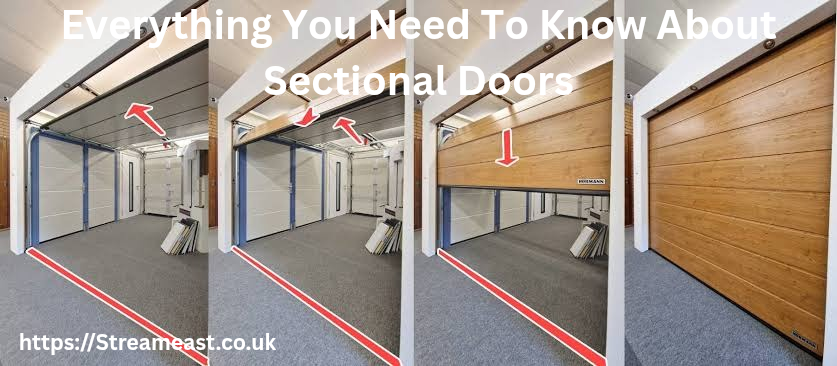
Sectional doors may look straightforward at first glance. Clean horizontal panels. A smooth upward motion. A quiet closing sound. They are not simply doors. They are part of the building’s heartbeat. They protect temperature integrity. They create comfortable work zones. They shield against dust and noise. They make early mornings easier and late shifts safer.
When sectional doors behave, people settle into work without friction. When they hesitate, the facility feels off rhythm before the first pallet even lands.
What sectional doors actually are
In simple terms, these doors are made of connected horizontal panels that lift vertically and rest tucked along the ceiling. There is no swinging arc, which means no precious yard space wasted. You get a smooth upward slide instead of a door pushing outward into a forklift path. This movement is supported by rollers, tracks, and spring balance systems.
Where they make a real difference
Sectional doors show up in many places, each with its own logic. Warehouses rely on them for efficient dock cycles and temperature stability. Food distributors appreciate them for keeping cold air in during fast loading. Automotive workshops prefer them for noise control and clear visibility. Hotels use them in receiving bays to keep back-of-house operations discreet and tidy. Even villa owners in the UAE choose them for quieter garage openings during early mornings. In every setting, the purpose remains the same: create an entry experience that respects workflow and environment.
How they feel in daily operation
Think of the motion as a practiced lift. When the springs are tuned and the rollers glide, you do not hear strain. You do not see jerking. The track does not protest. A good sectional door feels balanced. Operators like doors that open predictably at the same pace every day and close without fighting the frame. The goal is not drama or speed. The goal is a reliable rhythm that blends into the background.
Materials and durability in Gulf conditions
The Gulf environment does not forgive weak construction. Heat expands components, humidity tests coatings, and sand infiltrates the smallest gaps. That is why these doors rely on insulated steel or aluminum panels, reinforced tracks, and quality rubber seals. In Dubai, insulation is energy preservation. A sealed and insulated door prevents expensive cold air from escaping a chilled store. In automotive zones, sound-dampened glass and aluminum panels let natural light in while reducing workshop noise. Whether it is an industrial warehouse or a luxury home garage, the design choice reflects the climate and lifestyle of the region.
Care that keeps them performing
Sectional doors last a long time when treated as part of the workflow rather than as background hardware. Dusting the bottom seal, brushing sand off the track, checking spring tension with a quick listen, and applying lubricant before peak summer all matter. These are not heavy maintenance tasks. They are five-minute habits that save five-figure replacements.
Movement safety and site discipline
A door is only as efficient as the space around it. If forklifts dart without pattern or pallets block rolling paths, even the smoothest door will feel like a weak link. This is where protective measures enter quietly. You will often notice stout steel posts at entry edges. These are bollards, and they take the hit so the frame does not. They do not just protect the structure; they organize movement. Workers instinctively steer better, drivers reverse cleaner, and the whole area becomes safer.
Choosing sectional doors wisely
Choosing a door is easier when you think like an operator, not a brochure reader. Focus on expected daily cycles, climate control needs, available servicing response time, and whether you want light flowing in. Do not get distracted by glossy finishes without testing motion. Stand beside the door during a trial cycle. Listen to the motor. Watch the glide. Observe the seal. If you feel hesitation in the first minute, imagine that feeling multiplied across seasons. A door is not a showpiece; it is a silent teammate.
Quick buying rule: match the door to the job and the maintenance to the climate.
Dubai’s unique relationship with sectional doors
Dubai depends on movement. Rising temperatures mean more responsibility on door systems to retain cool air and protect products. Hotels want quiet receiving. Warehouses want energy efficiency. Car workshops want clean, modern front-of-house presentation without compromising safety behind the glass. Sectional doors quietly support all of it. They reduce energy waste, protect goods, and keep back-end spaces serene even during peak hours. In a city that values efficiency and comfort equally, they are a quiet backbone.
Conclusion
Sectional doors play a practical role in how modern spaces move, protect, and operate. From warehouses to workshops to private garages, they combine clean vertical lift, insulation, and space efficiency to support smoother workdays and quieter, safer environments. The same logic applies in many industrial settings, where an overhead door structure allows operations to run without interruption or wasted motion. In every case, these systems succeed when they disappear into the workflow and make movement feel natural.
Read also our recently article: What Really Sets a Dubai Real Estate Developer Apart?